






By Raj Brar, Founder of Argus AI Labs
A law firm can preserve every document and still lose the intelligence behind its best decisions. When an experienced partner exits the firm, the record remains. What disappears is how that partner weighed conflicting authorities, recognized hidden risk, and knew when precedent did not fit. Capturing documents is not the same as preserving judgment.
That is the tribal knowledge problem. The information survives. The intelligence does not.
Artificial intelligence can now capture far more of that knowledge than traditional documentation ever could. Interviews can be transcribed. Decisions can be extracted from conversations. Process steps can be reconstructed from operational records. Patterns can be identified across text, audio, video, and system activity.
But capturing expertise is not the same as creating an organizational asset. Until the knowledge can be traced, tested, challenged, updated, and safely used, the organization has collected claims. It has not created intelligence.
Documentation creates a dangerous illusion
When an experienced employee prepares to leave, the usual response is predictable: schedule interviews, record walkthroughs, update the knowledge base, and ask the expert to write down everything important.
That work has value. The danger begins when the organization treats it as completion.
An expert can accurately describe how a process worked while relying on conditions that no longer exist. A supplier may have changed. A policy may have been superseded. A threshold may belong to an older contract. An exception may have made sense during a system limitation that was fixed six months ago.
The record can be faithful to the person and still be wrong for the present.
This is why the strongest approaches do more than interview experts. A Forbes profile of Notch describes a practical sequence: observe how work actually happens, map the important if/then decisions, test those flows against live cases, and then turn them into usable rules and workflows. The valuable idea is not simply that undocumented knowledge should be captured. It is that captured knowledge must survive contact with reality.
That changes the problem. The task is no longer “How do we record what our best people know?” It becomes:
How do we determine which parts of that knowledge are still true, under what conditions, and for which decisions?
Extraction is a parsing task. Validation is a reasoning task.
Modern extraction systems can identify entities, summarize procedures, classify exceptions, and convert unstructured material into searchable content. Multi-agent systems can divide that work among specialized processes: one extracts decisions, another identifies constraints, another maps stakeholders, and another looks for exceptions.
That can produce an impressive body of organized knowledge. It can also organize errors with equal efficiency.
Extraction answers: What was said? What was observed? What appears in the record?
Validation asks harder questions:
- Which source supports this claim?
- Is that source still current?
- Does another source contradict it?
- Who had authority to make the decision?
- Which customer, contract, jurisdiction, product, or time period does it apply to?
- What action is the system allowed to take with it?
- Where is human judgment still required?
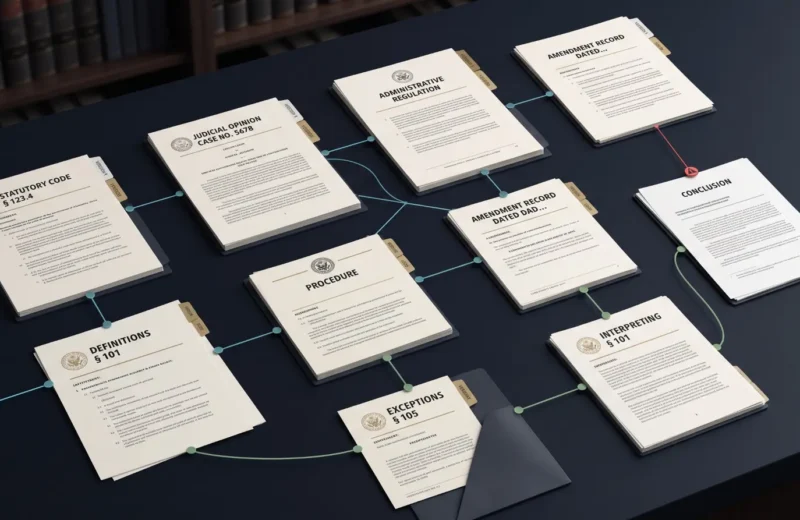
Those questions cannot be solved by accumulating more text. They require an architecture that preserves the relationships surrounding the knowledge.
Context does not live inside a paragraph
A paragraph can state a rule. It rarely contains every condition that makes the rule valid.
Imagine that an internal procedure says a purchase requires approval above a defined amount. The useful knowledge includes more than the threshold. It includes which business unit is involved, which contract governs the transaction, when the threshold became effective, which exceptions apply, who can approve it, and what evidence must be retained.
A retrieval system may find the correct paragraph. That does not prove the paragraph governs the present decision.
Modern RAG systems can combine vector search with metadata, reranking, structured databases, and other retrieval methods. They should not be dismissed. They are effective when the problem is finding and synthesizing relevant information.
But some decisions depend on explicit relationships: one policy supersedes another; one rule applies only to a defined entity; one authority outranks another; one obligation became effective on a specific date. When those relationships determine the answer, they need to be represented in a form the system can inspect rather than infer from textual similarity alone.
This is where a knowledge graph can become useful. Not because every problem needs a graph, but because nodes and relationships can preserve conditions, authority, provenance, and temporal validity in a form that can be queried and tested.
The real risk begins when knowledge starts taking action
An incomplete answer inside a search tool is a problem. The same answer inside an automated workflow is a larger one.
If an employee reads outdated guidance, the error may remain local long enough to be questioned. If an agent treats that guidance as a production rule, the mistake can move through approvals, customer decisions, system changes, notifications, and other agents before a person sees it.
This is the difference between searchable knowledge and executable knowledge.
Searchable knowledge helps someone locate information. Executable knowledge can influence what a system does. The second requires stronger controls than the first.
Before captured expertise enters an automated process, the organization needs to know:
- whether the knowledge is proposed, verified, disputed, or superseded;
- which evidence supports it;
- which conditions limit its use;
- whether a human must approve the decision;
- and how the result will return as evidence when the process succeeds or fails.
Without those boundaries, tribal knowledge AI can turn institutional memory into institutionalized error.
What we learned from building governed intelligence systems
In our work at Argus AI Labs, the difficult part has rarely been retrieving a relevant passage. The difficult part is determining whether the passage deserves to govern the answer.
That became especially clear while building legal intelligence architecture. A citation alone was not enough. The system also had to preserve the authority of the source, when it became valid, whether it had been superseded, which situation it applied to, how the conclusion was derived, and where human review remained mandatory.
The same architectural lesson applies to tribal knowledge.
An interview transcript is a source, not a truth layer. An experienced operator is an authority, but not an infallible one. A process document may be official and still be stale. A system record may show what happened without explaining why the decision made sense at the time.
Our approach separates four functions that are often collapsed into one:
- Capture: identify decisions, constraints, exceptions, entities, and relationships across approved sources.
- Structure: preserve provenance and context so a statement remains connected to the conditions that make it meaningful.
- Validate: test for contradiction, missing authority, stale sources, incomplete relationships, and unresolved human judgment.
- Execute: expose only appropriately governed knowledge to search, analysis, agents, or operational workflows—and return outcomes to the system as new evidence.
The graph is part of that architecture, but it is not the product by itself. The asset is the governed body of knowledge: traceable to sources, explicit about uncertainty, bounded in how it can be used, and capable of improving when execution produces new evidence.
Sovereignty protects the knowledge after it has been captured
Tribal knowledge includes the decisions, exceptions, relationships, and learned patterns that competitors cannot see. Moving that material into an opaque platform can solve one dependency while creating another.
If the organization cannot inspect the structured knowledge, export it, govern access to it, change the models that use it, and redeploy it on its own infrastructure, then the expertise remains trapped—only now inside a vendor rather than an employee.
This is why we treat sovereignty as an architectural requirement. The organization should control its source material, knowledge structures, validation rules, permissions, and audit history. Models and tools will change. The institutional knowledge asset should survive those changes.
Run the validation test before building the system
You do not need to capture everything your organization knows. Start with one consequential process and determine how much of its supporting knowledge can actually be trusted.
- Choose one process with a meaningful cost of failure. Select work that depends on experienced judgment, exceptions, or contextual decisions.
- Identify the people and records involved. Include operators, formal procedures, system activity, policies, contracts, and evidence of how the process actually runs.
- Extract decisions—not only steps. Capture the conditions, rationales, exceptions, authority, and handoffs surrounding each important choice.
- Challenge every consequential claim. Ask where it came from, whether it is current, whether another source conflicts, and where it applies.
- Define the execution boundary. Decide what can support search, what can recommend an action, and what must never proceed without human approval.
The result is not another inventory of documents. It is a map of what the organization knows, what it only believes, what has become stale, and what would be unsafe to automate.
That is the point at which tribal knowledge begins becoming an institutional asset.
If you want to test one critical process, discuss a Tribal Knowledge Validation Assessment with Argus AI Labs.
Frequently Asked Questions
What is tribal knowledge AI?
Tribal knowledge AI uses artificial intelligence to capture and structure experience-based knowledge that people apply but rarely document. This can include decision heuristics, exceptions, contextual signals, and the reasoning behind operational choices. The knowledge becomes dependable only after its sources, applicability, freshness, authority, and execution boundaries have been validated.
Why is documenting tribal knowledge not enough?
Documentation records what an expert says or what a process looked like at a particular moment. It does not automatically reveal whether the information remains current, conflicts with another source, or applies to the present decision. Documentation preserves information; validation determines whether that information can be trusted and used.
How do knowledge graphs help validate tribal knowledge?
Knowledge graphs represent entities and their explicit relationships, including provenance, authority, conditions, and temporal applicability. That structure can make missing connections, conflicting claims, stale references, and unsupported rules easier to detect. A graph does not make knowledge true by itself; it creates an inspectable architecture in which validation can occur.